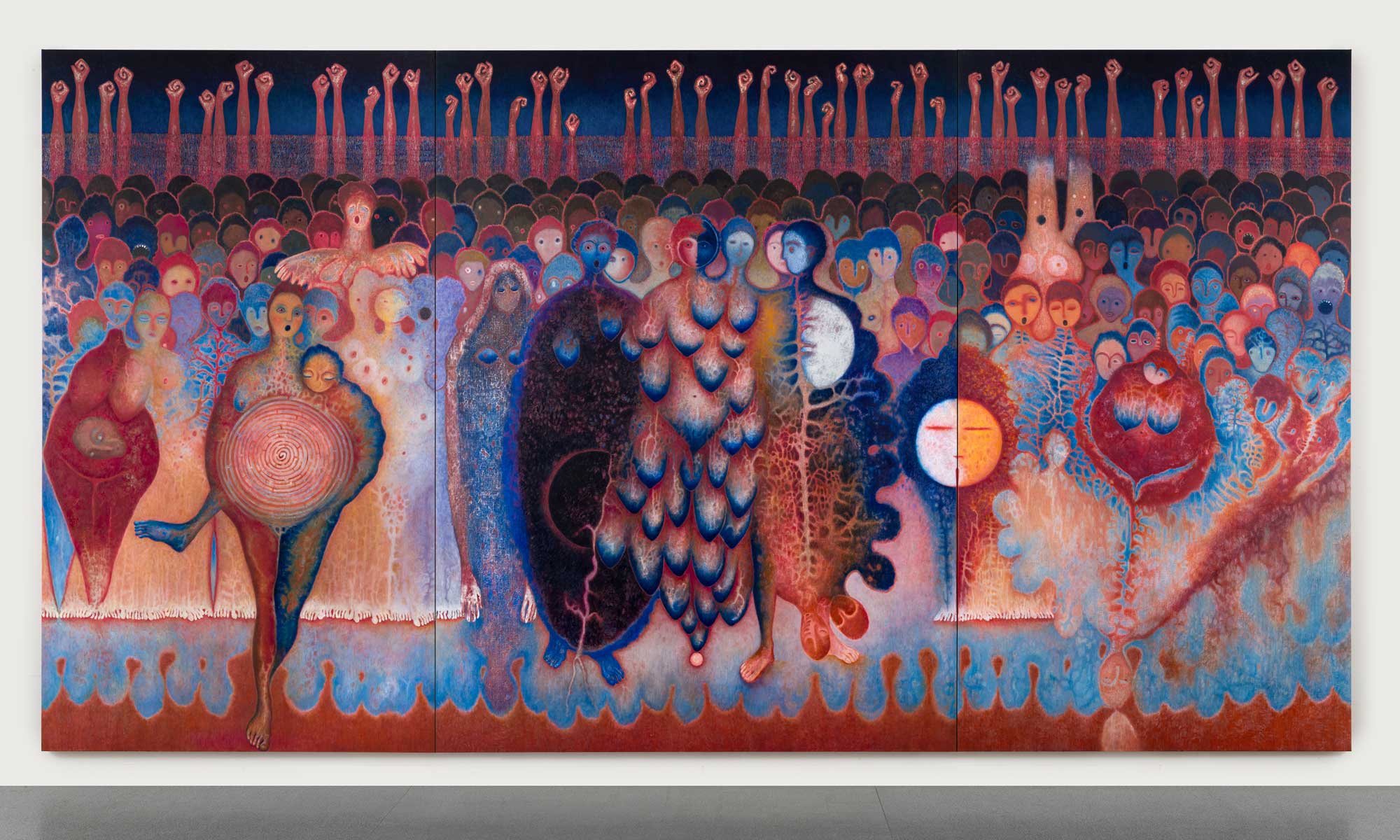
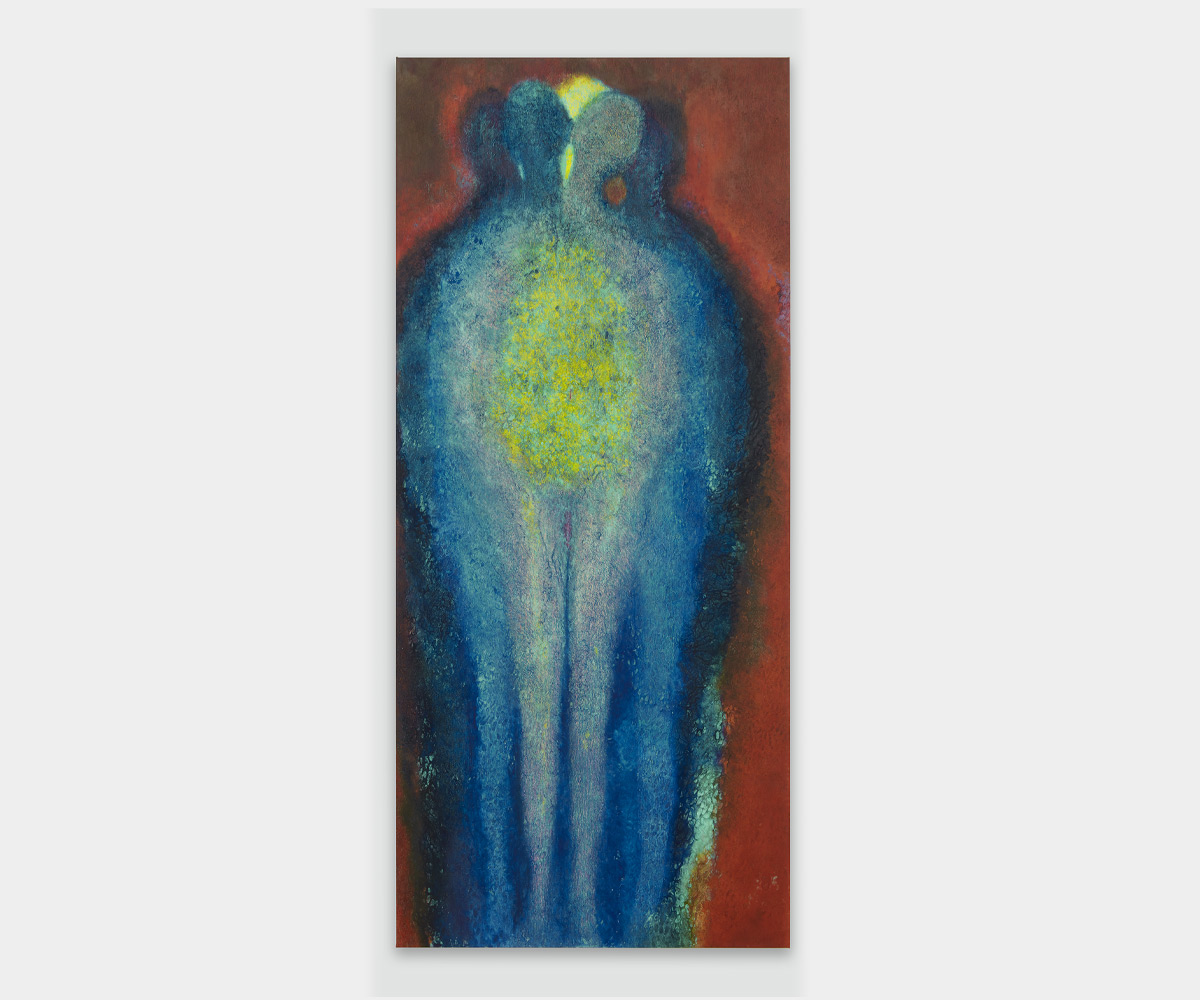
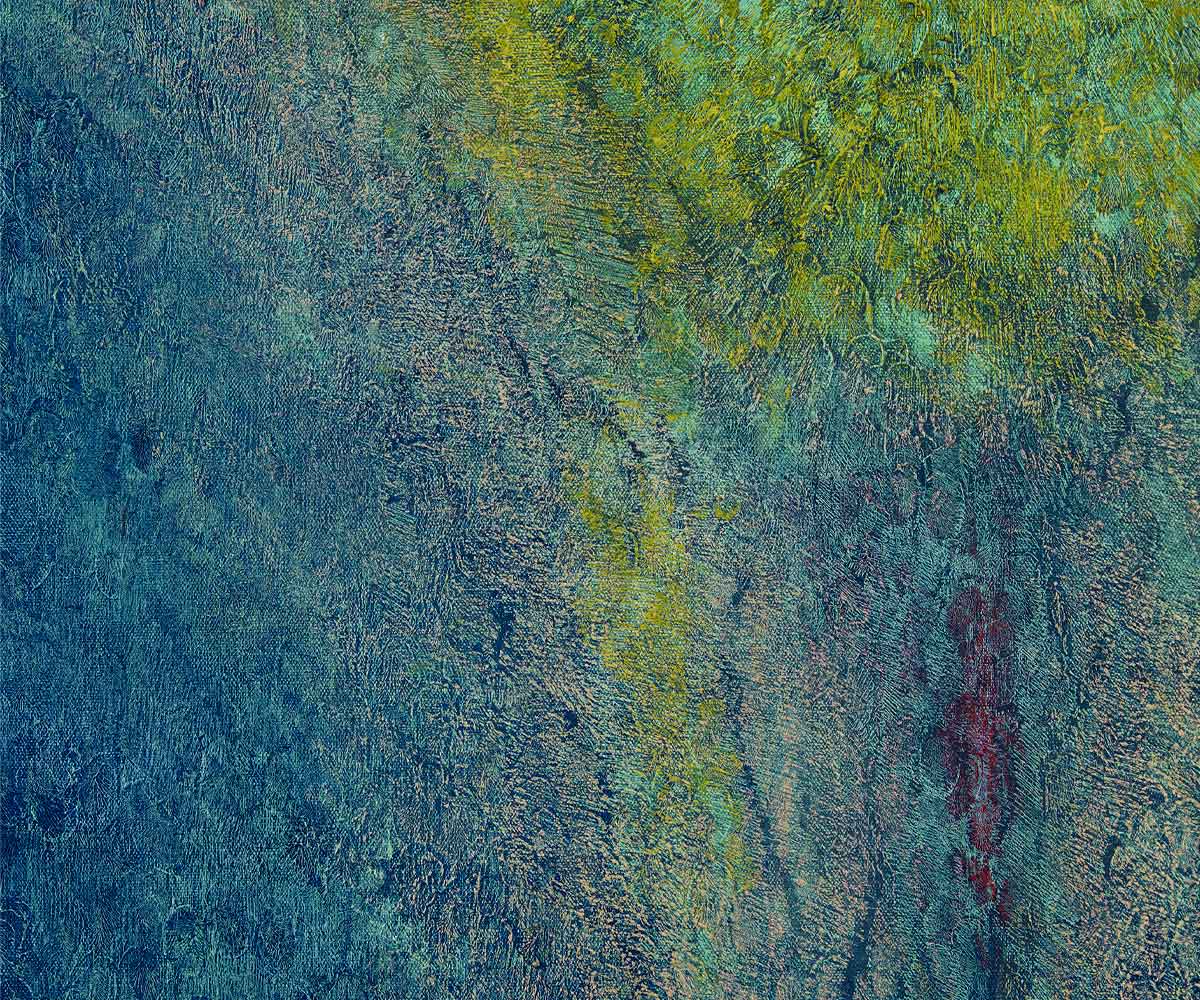
” (…) In Chorus, seven indeterminate figures stand facing the viewer, layering themselves upon the other to create the impression of a single body, a single pulsating diaphragm, and a single vibratory breath that radiates outwards with the expansion and disappearance of bodies. As the title of the painting suggests, these figures are united beyond the layered forms of the composition and join together as one voice, one song, and one company. The very process of respiration connects one to another through the space of shared air and inspiration. Luisa Rabbia’s artwork manifests these spaces in visual, tactile, and emotional forms to draw us into the collective domain of breathing to reflect upon ourselves and our relation to each other. Paintings like Chorus depict both the daily action of unconscious inhalation and exhalation. However, beyond this commonality of breathing, Rabbia expresses an intense spiritual intimacy that encompasses the ethereal life force of breath beyond human form. ” (Jessie Elizabeth Alperin, “Nine Works: Luisa Rabbia,” Venti Journal & Collective, Summer 2021)
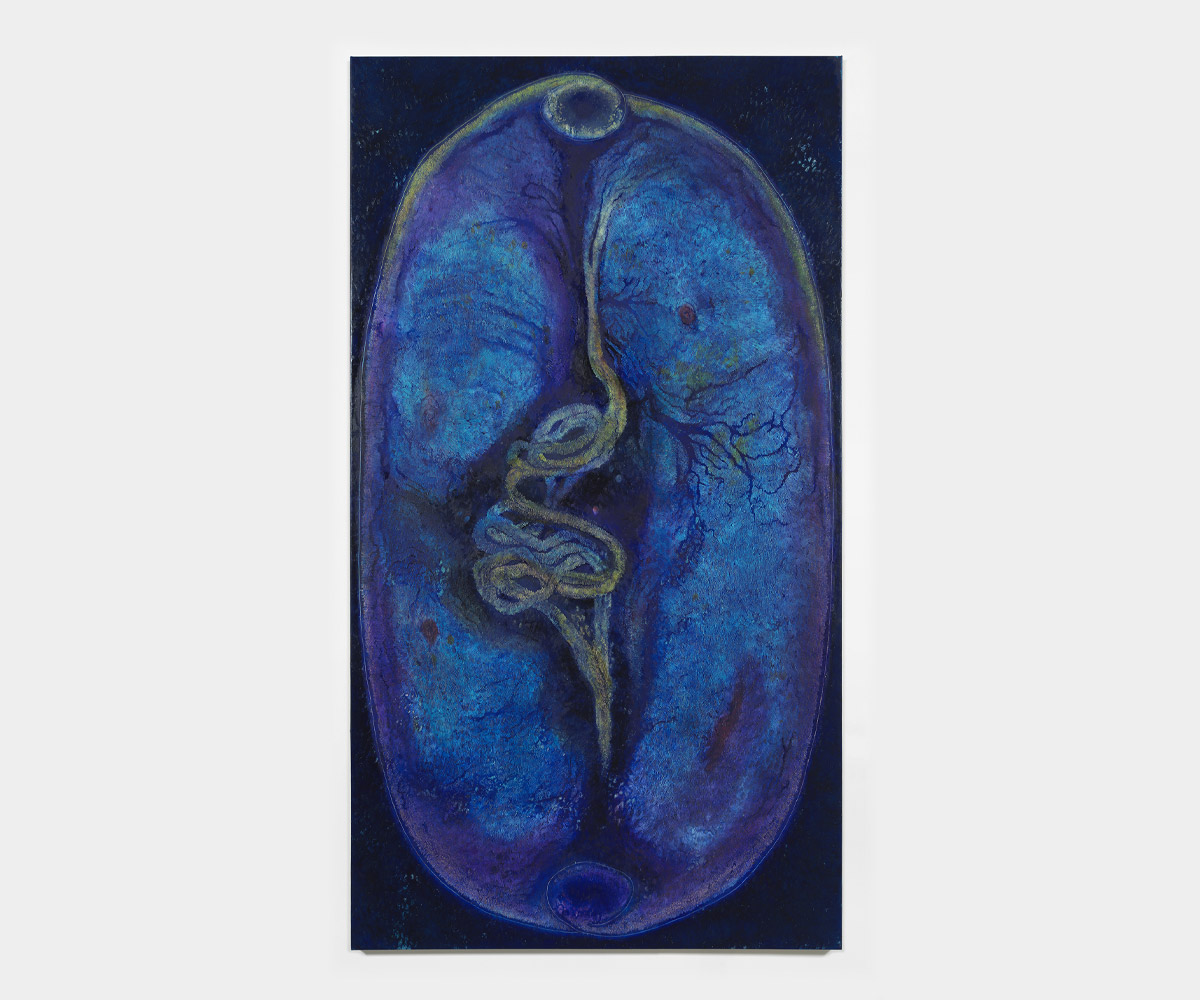
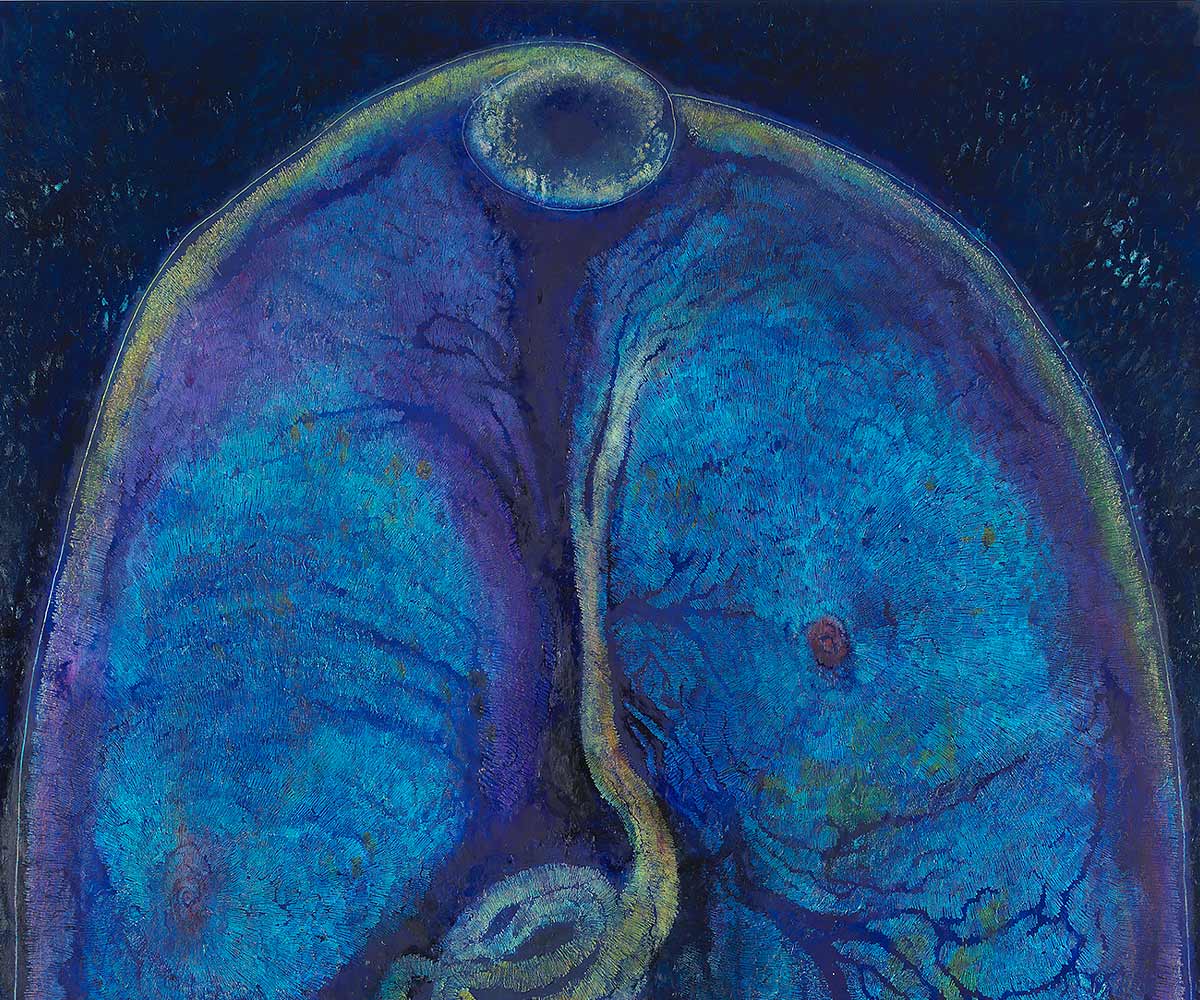
“(…) Blue dominated in virtually every one of Rabbia’s canvases, signaling their affinity with other famous artworks that explored or meditated upon, per Kandinsky, this “color of the heavens,” such as Odilon Redon’s numinous drawing of a woman’s head in profile, La cellule d’or (The Golden Cell), 1892, or Ad Reinhardt’s sublimely nonobjective blue paintings. Rabbia’s radiant Whole, 2019, features an armless, legless ur-human, perhaps freshly birthed from the primeval abyss, who levitates before a variegated backdrop of blood red. The being’s torso seems more shadow than flesh; it is painted in a shade of ultramarine that verges on jet. The subject is a fathomless window, godlike in its way—similar to the figure in Mitos, 2018, a celestial creature split in two who appears to be made from an endless number of particles. One cannot tell if this beryl-hued life- form is falling apart or coming together. It is a thing of infinite flux, mysterious and ancient—like the cosmos itself.” Donald Kuspit. Excerpt from “Reviews, New York: Luisa Rabbia at Peter Blum Gallery,” Artforum, March 2021)